North Shore Suburbs · ZIP 60201
Sub-Zero Repair in Evanston
Built-in refrigeration and wine preservation, engineered for decades of use. Factory-trained Sub-Zero technicians serving Evanston homes, using only genuine OEM parts.
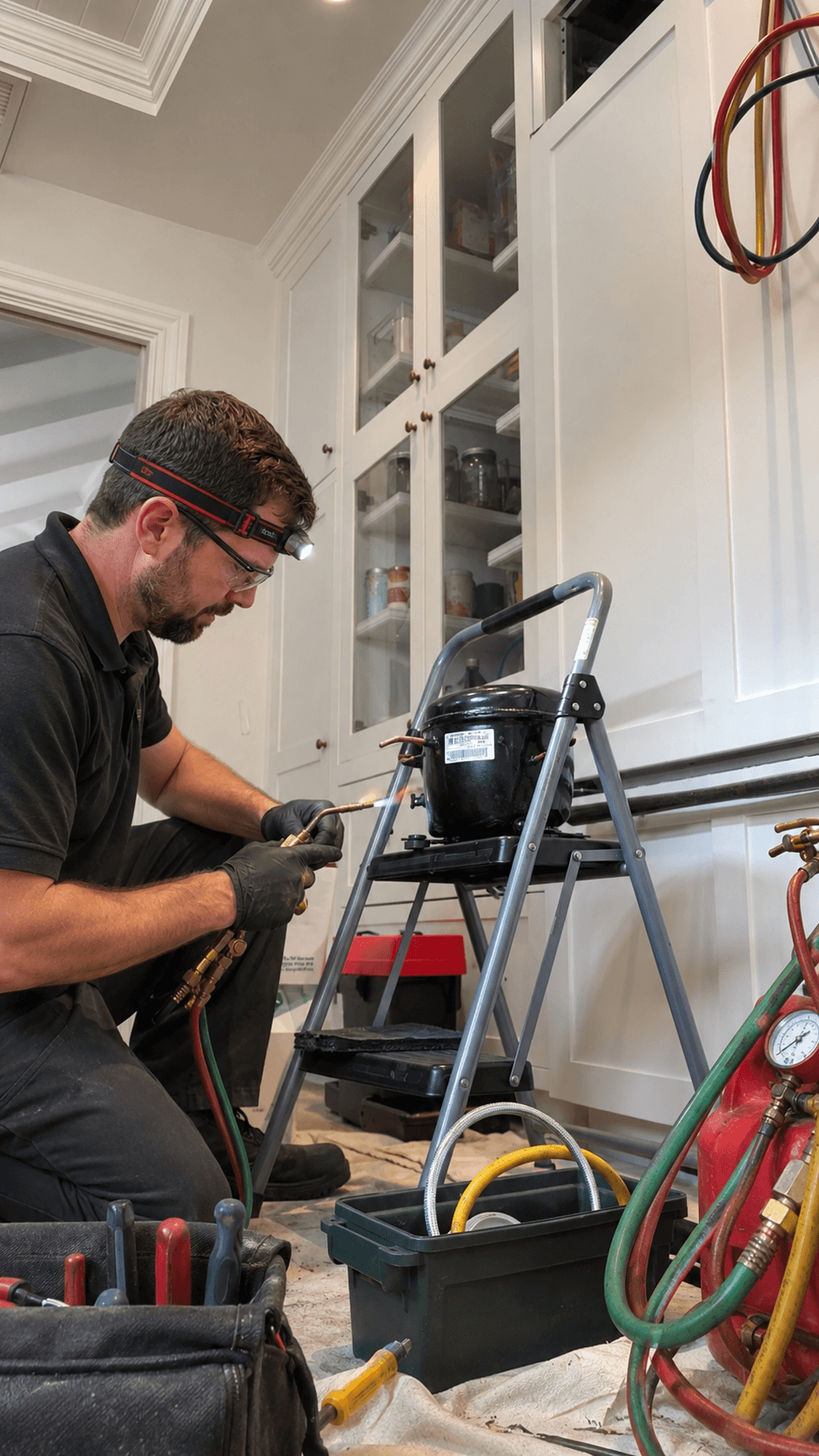
Sub-Zero Services in Evanston
Cooling failures, compressor issues, temperature inconsistency, and door seal problems on built-in and column refrigerators.
Column and integrated freezer diagnostics, frost buildup, and compressor failure repair.
Temperature zone failures, humidity control, and compressor repair for wine preservation units.
Clear ice production issues, water line problems, and built-in ice maker diagnostics.
Specialized diagnostics for fully-integrated, panel-ready built-in refrigeration systems.
Refrigerator and freezer column system repair, including paired installations.
Sub-Zero Service Notes for Evanston Homes
Sub-Zero's sealed compressor system is built to outlast most kitchen remodels, which means Chicago homeowners often own a unit for 20+ years before their first major repair. The most common failure point we see locally is the condenser fan motor collecting dust in finished basements and enclosed built-in cabinetry, restricting airflow long before the compressor itself fails.
What to Know About North Shore Suburbs Properties
Large single-family estate homes on generous lots, many built in the early-to-mid 20th century and expanded through additions, often with multiple HVAC zones and legacy systems layered over decades of renovation.
- Long driveways and detached garages are common, affecting equipment routing
- Estate-sized properties may have multiple mechanical rooms
- Some communities have architectural review boards for exterior equipment placement
- Wooded lots can affect condenser and duct access
Each North Shore suburb (Evanston, Wilmette, Winnetka, Kenilworth, Glencoe, Lake Forest, Lake Bluff, Skokie, Northfield, Highland Park, Glenview) has its own village or city building department; permit requirements should be verified by exact municipality rather than assumed from a neighboring suburb.
Local Friction in Evanston
Visits here typically involve city permit review timelines and alley access for older homes near Northwestern.
Common Equipment Risks Here
Homes here most often show century-old wiring and lake-effect humidity affecting outdoor equipment.
Evanston Sub-Zero owners—often Northwestern faculty, hospital executives, or lakefront estate residents—tend to schedule service reactively after years of flawless operation, which means the unit is frequently well past its first decade when we arrive. The sealed compressor system that defines Sub-Zero's longevity performs exceptionally well in Evanston's older brick colonials and historic Victorians, but the city's lake-effect humidity accelerates condenser coil corrosion faster than in drier western suburbs, especially on units installed in unventilated basements or tight butler's pantries common in pre-1940 construction. We see diagnostic visits run $250–$350, with compressor fan motor replacement—the most frequent failure point locally—landing in the $500–$700 range including the OEM part. Because Evanston requires city building permits for refrigerant-system work and has a backlog during summer months, scheduling should account for permit approval timelines if the repair involves any sealed-system component, not just the compressor itself.
Common Sub-Zero Questions in Evanston
Most refrigerator repairs are diagnosed and completed in a single visit. The most common causes of a Sub-Zero or built-in refrigerator not cooling are a failing compressor, a blocked condenser coil, or a worn door seal — all of which a factory-trained technician can identify within the first hour. Typical cost range: $250 – $900.
Freezer issues are usually caused by a failing defrost system, a worn door gasket, or a compressor nearing the end of its life. Most repairs are completed same-day once the exact cause is confirmed on site. Typical cost range: $250 – $850.
Wine cooler problems are most often related to a single failed temperature zone, a humidity sensor, or the compressor — the rest of the unit typically continues working normally, which is why a full diagnostic before replacement usually saves money. Typical cost range: $200 – $700.
Ice maker issues are typically caused by a clogged water line, a failing water valve, or a jammed auger — all repairable without replacing the entire unit in most cases. Typical cost range: $150 – $500.