Factory-Trained · Genuine OEM Parts
Sub-Zero Repair in Chicago
Built-in refrigeration and wine preservation, engineered for decades of use. Our technicians are factory-trained specifically on Sub-Zero equipment, using only genuine OEM parts backed by a warranty.
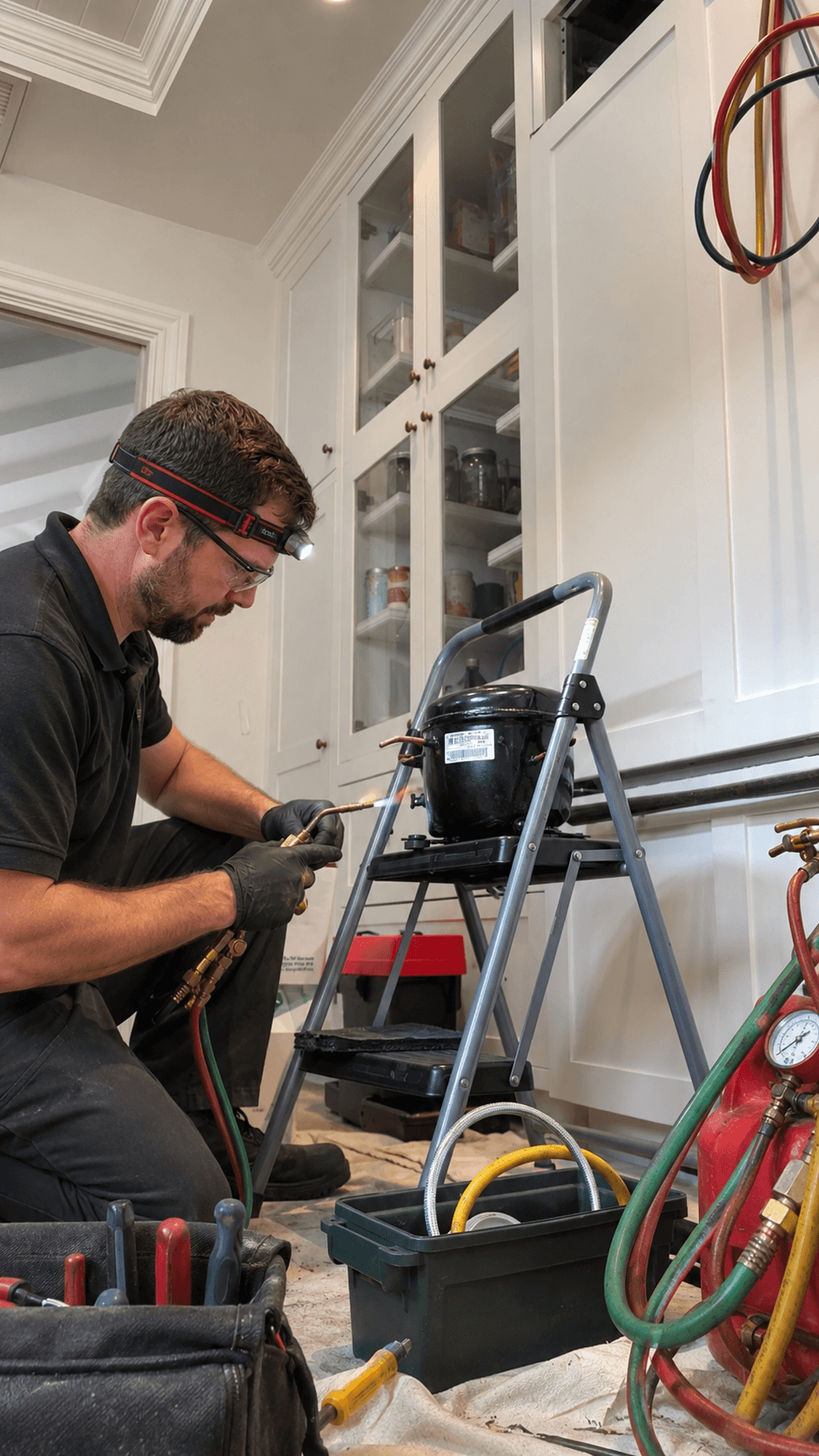
About Sub-Zero Appliances
Sub-Zero built-in and freestanding refrigerators are serviced in Chicago by factory-trained technicians who understand the brand's dual-refrigeration engineering — not general appliance repair generalists. Sub-Zero uses fully separate compressors and evaporators for the refrigerator and freezer compartments, which prevents odor transfer and holds tighter temperature control, but also means two independent sealed systems to diagnose when something fails. Certified Sub-Zero repair in Chicago starts with isolating which circuit is affected before any parts are ordered.
Why Chicago Homeowners Choose Us for Sub-Zero
Sub-Zero owners in Chicago are typically renovating a kitchen north of six figures or maintaining a built-in installation that's meant to last decades — Sub-Zero units are engineered for 20+ years of service life, so a repair is almost always the financially smarter move over replacement. Our technicians diagnose the exact failed component using OEM parts, so the investment that made Sub-Zero worth buying in the first place stays intact.
Sub-Zero Services We Provide
Cooling failures, compressor issues, temperature inconsistency, and door seal problems on built-in and column refrigerators.
Column and integrated freezer diagnostics, frost buildup, and compressor failure repair.
Temperature zone failures, humidity control, and compressor repair for wine preservation units.
Clear ice production issues, water line problems, and built-in ice maker diagnostics.
Specialized diagnostics for fully-integrated, panel-ready built-in refrigeration systems.
Refrigerator and freezer column system repair, including paired installations.
Common Sub-Zero Problems We Repair in Chicago
Sub-Zero Models We Service in Chicago
BI-30, BI-36, BI-36U, BI-42, BI-42S, BI-48 — full-height and side-by-side built-in configurations
700BF, 700BC, 700TCI, 700TR, PRO 48, Designer Series
UC-15, UC-24, UC-27, wine storage columns, integrated wine coolers
500 series and 600 series (all configurations), side-by-side units, overlay and integrated panel models
How We Diagnose Sub-Zero Cooling Issues
The sequence we follow on a typical service call, in order of likelihood.
Dirty condenser coils are the single leading cause of Sub-Zero cooling failure. Because Sub-Zero's dual system requires both compressors to reject heat efficiently, clogged coils cause overheating and short-cycling. We check and clean the condenser first — in many cases this alone restores normal cooling.
Sub-Zero's dual refrigeration design means the refrigerator and freezer operate independently. If one compartment cools normally while the other doesn't, the problem is isolated to that circuit's compressor or evaporator — narrowing the diagnosis significantly before any parts are ordered.
Sub-Zero's vacuum magnetic door seals are more sophisticated than standard gaskets. A seal that looks intact can still allow warm air infiltration. We test the full door perimeter to catch subtle leak points that drive compressor overrun and inconsistent cooling.
A faulty thermistor (temperature sensor) can cause the control board to run a circuit continuously without ever reaching set temperature — with no mechanical failure at all. This test is non-invasive and quick.
In older units, refrigerant leaks in the sealed system are checked when condenser, fan, and thermistor tests come back normal but cooling still isn't right.
Sub-Zero Maintenance Tips for Chicago Homeowners
- Clean condenser coils every 12 months — every 6 months in households with pets
- Replace the air purification cartridge annually to maintain food freshness
- Inspect door seals every 6 months for cracks or compression loss
- Keep the refrigerator compartment at 38°F and freezer at 0°F for optimal preservation
- Maintain at least 1 inch of clearance around the unit for proper ventilation
Frequently Asked Questions — Sub-Zero Repair
Do I need an authorized Sub-Zero dealer to repair my unit?
No. Authorization is only required for service under an active manufacturer warranty. For out-of-warranty units, any qualified technician can legally repair a Sub-Zero. We have hands-on experience with the dual-refrigeration architecture, vacuum door seals, and air purification systems specific to this brand.
How long do Sub-Zero refrigerators last?
Sub-Zero units are engineered to last over 20 years with proper maintenance — roughly twice the lifespan of a standard refrigerator. Annual condenser cleaning and periodic door seal inspection are the two maintenance tasks that most affect longevity. Well-maintained units routinely reach 25+ years.
Is it worth repairing an older Sub-Zero instead of replacing it?
In most cases, yes. Given the 20+ year engineered lifespan, a repair on a unit under 15-20 years old is almost always the financially smarter move. We give an honest assessment on the first visit — if repair genuinely doesn't make sense, we say so directly.
Do you service Sub-Zero built-in refrigerators installed flush with cabinetry?
Yes. Built-in (BI series) installations are the most common Sub-Zero configuration in Chicago luxury homes, North Shore residences, and high-rise condos. Our technicians understand built-in access requirements and can typically diagnose and repair without cabinet removal.
My Sub-Zero is freezing food in the refrigerator section — what's wrong?
This is almost always a failed thermistor reading incorrectly, causing the control board to over-run the evaporator. Less commonly, a stuck damper lets too much cold air in from the freezer circuit. Both are diagnosable on the first visit — Sub-Zero's dual-circuit design actually makes compartment-specific problems easier to isolate than single-compressor refrigerators.
Does Sub-Zero service work in Chicago high-rise condos?
Yes. Built-in Sub-Zero refrigerators are standard equipment in many Chicago luxury high-rises along the lakefront, in the Gold Coast, River North, and Streeterville. We're familiar with building access procedures, freight elevator scheduling, and management approval requirements common to these buildings.