Licensed · Permit-Conscious Installation
Carrier HVAC in Chicago
Variable-speed comfort systems with premium Infinity-series controls. Load-calibrated design and quiet installation for premium Chicago homes.
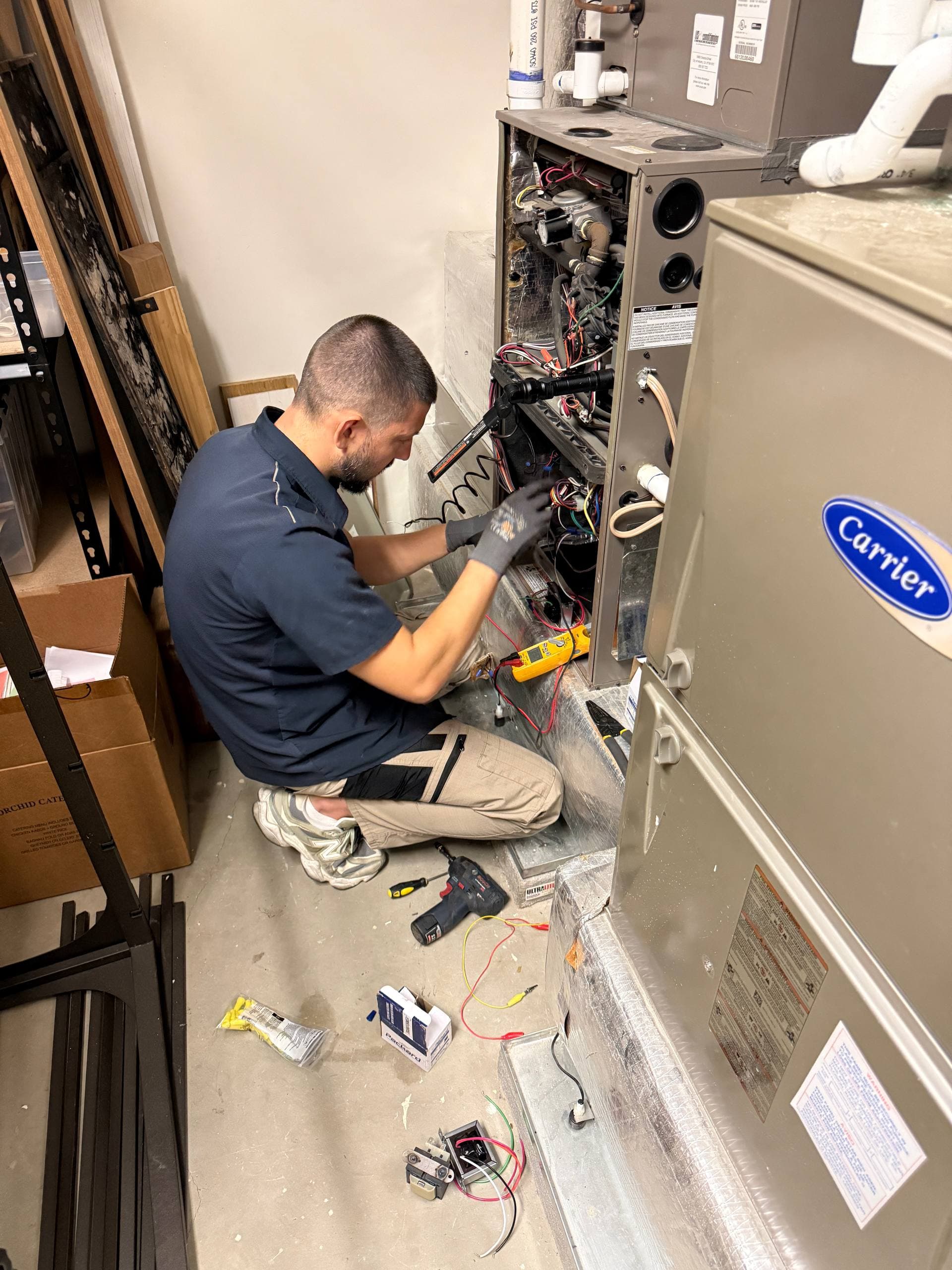
About Carrier HVAC Systems
Chicago Luxury Appliance & HVAC provides factory-trained Carrier repair Chicago service with OEM parts stocking and expertise in the brand's variable-speed inverter compressors and Infinity control systems. Carrier's tiered lineup—from Comfort single-stage units through Performance and Infinity variable-speed platforms—requires technicians familiar with communicating thermostats, multi-stage cooling, and Greenspeed intelligence. Our certified Carrier technician team diagnoses condenser coil icing, compressor short-cycling, and control board faults across all tonnage ranges, ensuring Chicago homeowners receive the load-matched performance and quiet operation Carrier systems are engineered to deliver in both vintage brownstones and new luxury construction.
Why Chicago Homeowners Choose Us for Carrier
Carrier owners in Chicago's Lincoln Park, Gold Coast, and North Shore neighborhoods expect whisper-quiet variable-speed comfort and precise zone control—outcomes only achievable when a certified technician understands Infinity communicating protocols and Greenspeed inverter logic. Factory training matters because misdiagnosed control boards ($400–$900) or incorrectly charged refrigerant circuits can cascade into compressor failure ($2,200–$4,500). Our team stocks OEM Carrier parts, performs load calculations before replacement ($8,000–$25,000 range), and ensures every repair—from a $200 sensor to a $16,000 AC replacement—honors the engineered performance your home's comfort plan depends on.
Carrier Services We Provide
Load-calibrated system design, AHRI-matched equipment, and permit-conscious installation.
Quiet outdoor unit placement, matched coils, and refrigerant transition for premium cooling replacement.
All-electric comfort planning, panel capacity review, and variable-speed heat pump installation.
Diagnostics and repair for gas and electric furnaces, including emergency winter response.
Urgent no-heat and no-cooling response, compressor failure, and frozen coil triage.
Common Carrier Problems We Repair in Chicago
CarrierSystems We Install & Service in Chicago
Top-tier systems with Greenspeed intelligence, communicating Infinity controls, and SEER ratings up to 26. Includes variable-speed heat pumps, gas furnaces with modulating burners, and multi-stage air conditioners engineered for whisper-quiet operation and precise humidity control in luxury homes.
Mid-tier two-stage compressors and furnaces with enhanced efficiency (SEER 16–18, AFUE 96–97%) and quieter operation than single-stage units. Designed for whole-home comfort with standard thermostat compatibility and reliable performance in Chicago's temperature swings.
Value-tier single-stage air conditioners, heat pumps, and 80% AFUE furnaces offering dependable heating and cooling for budget-conscious installations or rental properties. Simpler controls and lower upfront cost, with straightforward serviceability and widely available replacement parts.
How We Diagnose Carrier System Issues
The sequence we follow on a typical service call, in order of likelihood.
First, verify the Infinity or Côr thermostat is communicating with the air handler and condenser. Carrier's proprietary Abode protocol requires both units to handshake—if the display shows a comm error or blank screen, the technician isolates whether the issue is the thermostat, the control board in the air handler, or a damaged communication wire. Most comm faults resolve with a board reboot or wire repair, not full replacement.
Next, the technician monitors whether the Greenspeed inverter compressor ramps smoothly from low to high capacity or short-cycles. Using gauges and amp draw readings, the tech confirms refrigerant charge, checks for restriction in the line set, and verifies the inverter module is sending proper voltage. Variable-speed systems are sensitive to even slight charge imbalances, so accurate subcooling and superheat measurements are critical to avoid misdiagnosis.
Then, measure static pressure across the blower to confirm the duct system isn't starving the variable-speed ECM motor. Carrier's multi-stage and modulating furnaces require precise airflow—undersized returns or leaky ducts cause the system to fault or run inefficiently. The technician inspects the filter, return grilles, and trunk lines, then adjusts blower speed settings in the control board if static is within range but airflow is still low.
Finally, for no-heat calls, inspect the hot surface igniter, flame sensor rod, and pressure switches. Carrier furnaces use a flame rectification circuit that's highly sensitive to a dirty or misaligned sensor—cleaning or repositioning the rod often restores heat immediately. If the igniter glows but burners don't light, the gas valve, pressure switch, or rollout limit may have tripped, requiring individual component testing before ordering parts.
Carrier Maintenance Tips for Chicago Homeowners
- Replace MERV 8–11 filters every 60–90 days; higher MERV ratings increase static pressure on variable-speed blowers.
- Keep outdoor condenser coils clear of cottonwood seeds, leaves, and landscaping debris; rinse fins annually with low-pressure water.
- Schedule annual fall furnace inspections to clean flame sensors, check igniter resistance, and verify pressure switch tubing.
- Ensure Infinity or Côr thermostat firmware is up to date; outdated software can cause communication faults with newer air handlers.
- Trim vegetation at least two feet from the condenser; airflow restriction forces the compressor to work harder and shortens its lifespan.
Frequently Asked Questions — Carrier Service
Does Chicago Luxury Appliance & HVAC hold factory authorization for Carrier warranty work?
Yes, our technicians are factory-trained on Carrier systems and carry OEM parts to honor manufacturer warranties. We document all repairs with serial numbers, part tracking, and labor timestamps required for warranty claims. If your system is still under Carrier's limited parts warranty (typically 5–10 years depending on registration), we coordinate directly with the manufacturer to ensure covered components are replaced at no parts cost to you, with only labor and diagnostic fees applying.
How long do Carrier HVAC systems typically last in Chicago's climate?
With annual maintenance, Carrier air conditioners and heat pumps average 15–18 years, while gas furnaces often reach 18–22 years before efficiency and reliability decline noticeably. Chicago's temperature extremes—subzero winters and humid summers—stress compressors and heat exchangers more than milder climates, so proactive filter changes, coil cleaning, and flame sensor maintenance directly extend system life. Variable-speed Infinity systems, when maintained, often outlast single-stage units due to gentler startup cycles and lower operating stress.
When does it make more sense to replace a Carrier system than continue repairing it?
If your Carrier system is over 12 years old and a major component—compressor, heat exchanger, or control board—fails, replacement usually delivers better long-term value than a $2,000+ repair. Calculate the cost of the repair as a percentage of a new system ($8,000–$16,000 for AC replacement): if one repair exceeds 30% of replacement cost and the unit is past mid-life, investing in a new variable-speed Infinity system with a fresh 10-year parts warranty and 20+ SEER efficiency typically saves money over the next five years in avoided repairs and lower utility bills.
Why does my Carrier Infinity thermostat show a communication error intermittently?
Intermittent comm errors on Infinity controls are usually caused by a loose or corroded connection on the Abode communication bus, a failing control board capacitor in the air handler, or electrical interference from a nearby device. The technician first reseats all communication wire connections at the thermostat, air handler, and condenser, then tests for voltage drops and checks the control board for bulging capacitors or burnt traces. If wiring and boards pass inspection, a firmware update or thermostat replacement typically resolves the fault permanently.
Can a Carrier variable-speed system handle Chicago winters without auxiliary heat?
Carrier Greenspeed heat pumps maintain heating capacity down to –15°F or lower with inverter-driven compressors, but most Chicago installations include auxiliary electric or gas heat as backup when outdoor temps drop below the system's balance point (typically 20–30°F). A properly sized Carrier heat pump will handle 80–90% of the heating season on its own, only engaging aux heat during the coldest weeks. Load calculation and electrical panel capacity review during installation ensure the system and backup heat are right-sized for your home's envelope and Chicago's winter design temperature of –5°F.