Near North / Downtown · ZIP 60605
Sub-Zero Repair in South Loop
Built-in refrigeration and wine preservation, engineered for decades of use. Factory-trained Sub-Zero technicians serving South Loop homes, using only genuine OEM parts.
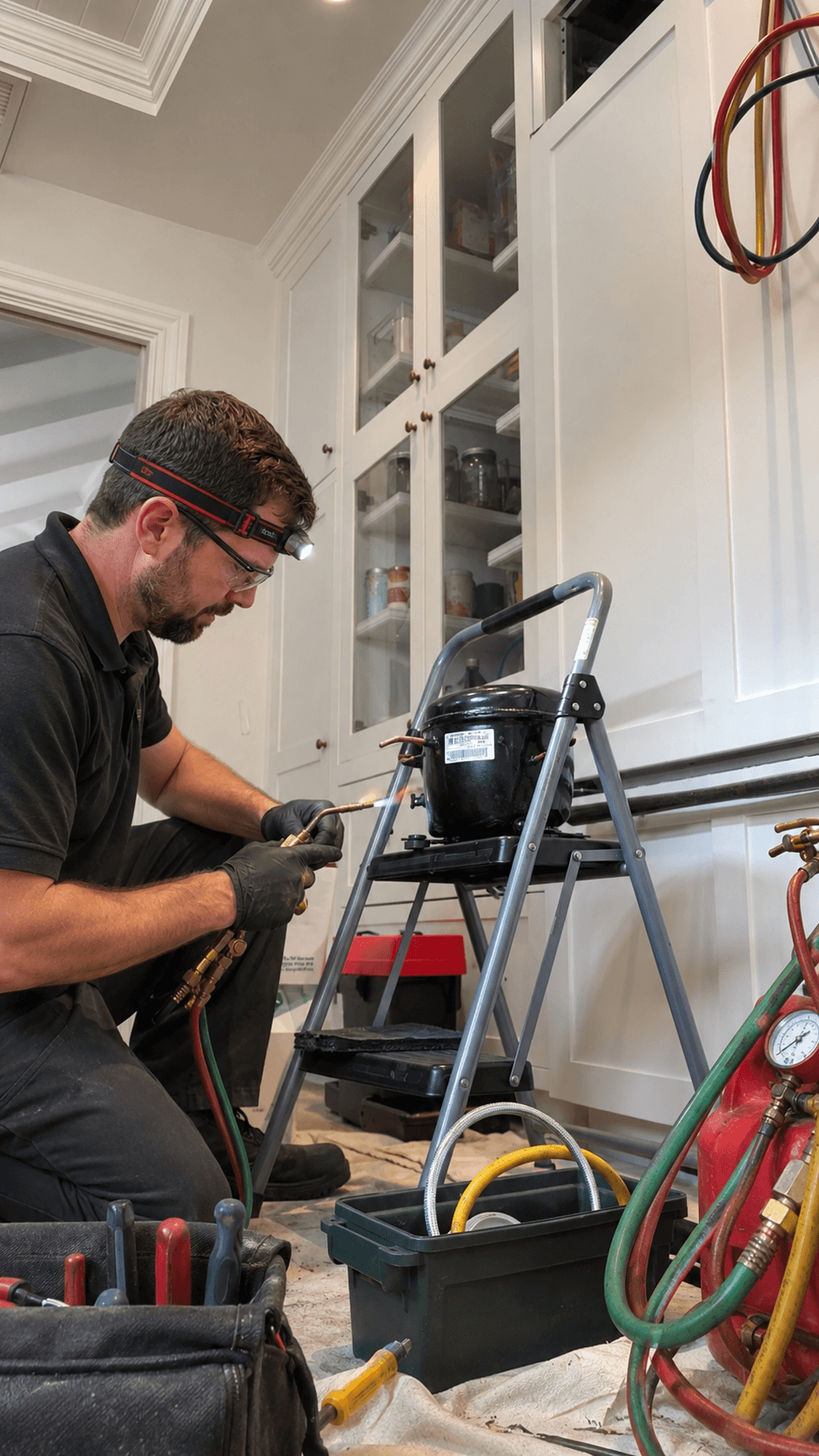
Sub-Zero Services in South Loop
Cooling failures, compressor issues, temperature inconsistency, and door seal problems on built-in and column refrigerators.
Column and integrated freezer diagnostics, frost buildup, and compressor failure repair.
Temperature zone failures, humidity control, and compressor repair for wine preservation units.
Clear ice production issues, water line problems, and built-in ice maker diagnostics.
Specialized diagnostics for fully-integrated, panel-ready built-in refrigeration systems.
Refrigerator and freezer column system repair, including paired installations.
Sub-Zero Service Notes for South Loop Homes
Sub-Zero's sealed compressor system is built to outlast most kitchen remodels, which means Chicago homeowners often own a unit for 20+ years before their first major repair. The most common failure point we see locally is the condenser fan motor collecting dust in finished basements and enclosed built-in cabinetry, restricting airflow long before the compressor itself fails.
What to Know About Near North / Downtown Properties
High-rise condos, converted lofts, and pre-war luxury buildings dominate this area, often with shared mechanical rooms, freight-elevator-only equipment access, and building-management approval requirements for any HVAC or major appliance work.
- Building management or HOA approval often required before scheduling
- Freight elevator reservations may be needed for large equipment
- Loading dock access windows vary by building
- Condo association rules may restrict service hours
Work within the City of Chicago follows Chicago Department of Buildings permitting for mechanical, electrical, and plumbing scope. High-rise and mixed-use buildings may also require building management sign-off in addition to city permits.
Local Friction in South Loop
Visits here typically involve loading dock reservations and museum-campus event traffic.
Common Equipment Risks Here
Homes here most often show aging boiler systems in older buildings alongside newer high-rise stock.
Homeowners in South Loop's high-rise condos and museum-campus loft conversions often keep their Sub-Zero units in service for decades—long enough that the first major repair call arrives not from compressor failure, but from a condenser fan motor choked with dust accumulation in enclosed cabinetry or finished basement mechanical closets common to this neighborhood's building stock. Because these sealed systems are engineered to outlast a typical kitchen remodel, most South Loop service visits are straightforward diagnostic-and-repair scenarios rather than full replacements: a clogged condenser coil cleanup and fan motor replacement typically falls in the $250–$600 range, while a compressor rebuild on a 15-year-old column unit might reach $900–$1,200 depending on refrigerant type and parts lead time. The real friction here isn't the repair complexity—it's coordinating loading dock reservations, freight elevator windows, and HOA approvals before a technician ever steps foot in the unit, which is why confirming building access requirements during the initial scheduling call saves days of delay on what would otherwise be a same-day fix.
Common Sub-Zero Questions in South Loop
Most refrigerator repairs are diagnosed and completed in a single visit. The most common causes of a Sub-Zero or built-in refrigerator not cooling are a failing compressor, a blocked condenser coil, or a worn door seal — all of which a factory-trained technician can identify within the first hour. Typical cost range: $250 – $900.
Freezer issues are usually caused by a failing defrost system, a worn door gasket, or a compressor nearing the end of its life. Most repairs are completed same-day once the exact cause is confirmed on site. Typical cost range: $250 – $850.
Wine cooler problems are most often related to a single failed temperature zone, a humidity sensor, or the compressor — the rest of the unit typically continues working normally, which is why a full diagnostic before replacement usually saves money. Typical cost range: $200 – $700.
Ice maker issues are typically caused by a clogged water line, a failing water valve, or a jammed auger — all repairable without replacing the entire unit in most cases. Typical cost range: $150 – $500.