Guide
When a Carrier AC System Is Worth Repairing vs Replacing
Field write-up by Alex R., Senior Technician
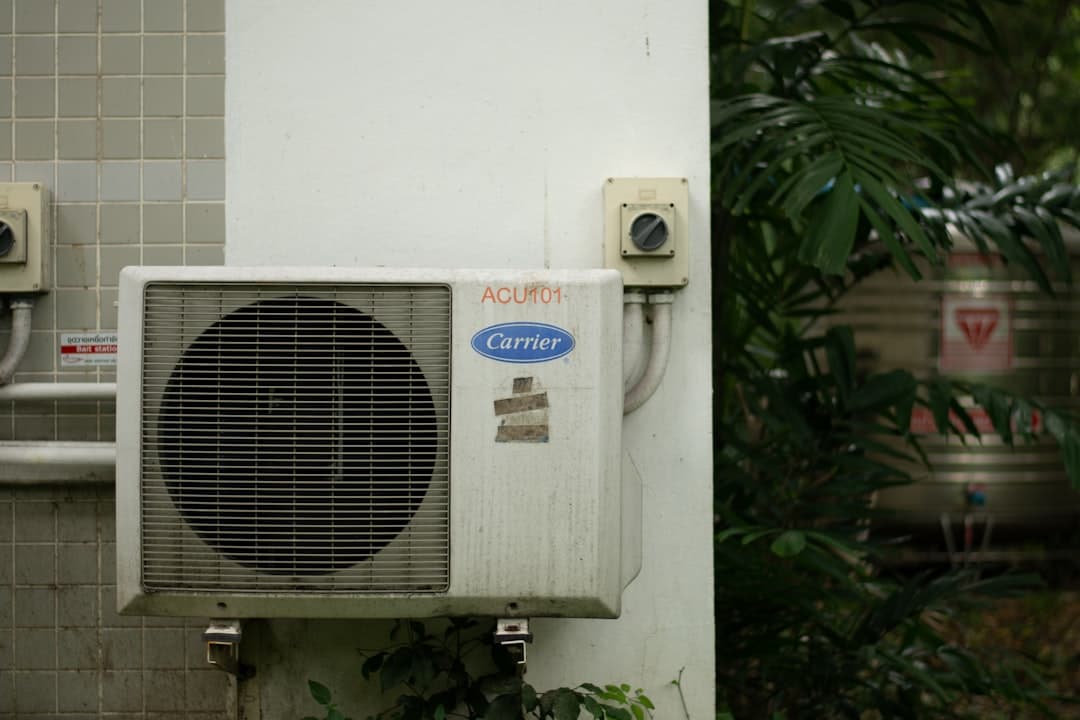
Carrier AC repair calls in Chicago usually cost between $200 and $900, but the more important question isn't what the repair costs — it's whether you're one breakdown away from needing a full replacement anyway. Most homeowners overspend by either replacing too early or patching a system that's near the end of its useful life.
1. Age and Compressor Health Matter More Than a Single Repair Cost
A Carrier AC system under 8 years old with a compressor failure is almost always worth repairing, especially if the unit is still under warranty coverage. The compressor is the single most expensive component, but if the rest of the system is sound — coils, blower, and control board — a compressor replacement extends the system's life by another decade in most cases.
Once a system crosses the 12-year mark, the calculus shifts. At that age, you're likely facing refrigerant compatibility issues (older R-22 systems can't be recharged affordably anymore), and secondary failures like the condenser fan motor or capacitor start happening more frequently. A single $600 repair on a 14-year-old system might make sense in isolation, but if you're looking at a second or third repair within 18 months, you're better off budgeting for replacement.
2. Infinity Control Errors Don't Always Mean the Compressor Is Failing
Carrier's Infinity control boards communicate directly with variable-speed equipment, and a single miscommunication error can shut down cooling even when the compressor and blower are mechanically sound. We see this frequently in systems that are 5 to 10 years old: the outdoor unit won't turn on, the thermostat shows an error code, and the immediate assumption is that the compressor has failed.
In reality, a control-system diagnostic should always come before assuming a compressor failure. A failing capacitor, a communication wire issue, or a firmware mismatch between the thermostat and outdoor unit can all present the same symptoms. The repair cost for a control board or capacitor is typically $200 to $450, compared to $1,800+ for a compressor — so getting the diagnosis right the first visit saves thousands.
3. Refrigerant Type and Recharge Costs Are a Hidden Replacement Trigger
If your Carrier system was installed before 2010, it likely uses R-22 refrigerant, which is no longer manufactured and has become prohibitively expensive to recharge. A pound of R-22 that used to cost $40 now costs $150 or more, and a full recharge on a leaking system can run $800 to $1,500 depending on how much refrigerant has been lost.
Even if the leak is small and repairable, recharging an R-22 system is a short-term fix that delays the inevitable. Newer refrigerants like R-410A are significantly cheaper and more efficient, but they require a full system replacement — you can't retrofit an R-22 system to run on R-410A. If you're facing a refrigerant recharge on a system over 12 years old, replacement is almost always the better long-term value.
4. The 50% Rule: When Repair Cost Crosses Half the Replacement Price
A common rule in HVAC is that if a repair costs more than 50% of what a new system would cost, and the system is past the halfway point of its expected lifespan, replacement makes more financial sense. For Carrier systems, that lifespan is typically 12 to 15 years, depending on maintenance and usage.
A full Carrier AC replacement in Chicago typically runs between $6,000 and $16,000 depending on system size, installation complexity, and whether you're upgrading to a variable-speed model. That means if you're looking at a $3,500 compressor repair on a 10-year-old system, you're spending more than half the cost of a new system for a unit that's already two-thirds of the way through its life expectancy. In that scenario, replacement is the smarter investment.
5. Efficiency Gains and Utility Savings Can Justify Early Replacement
Even if your Carrier system is repairable, a unit that's 12+ years old is running at a much lower efficiency than current models. Older single-stage systems typically operate at 10 to 13 SEER, while modern variable-speed Carrier systems can reach 18 to 20 SEER or higher. That efficiency difference translates to 30% to 40% lower cooling costs each summer.
For a home that's spending $200 per month on cooling during Chicago's peak summer weeks, upgrading to a high-efficiency system can save $60 to $80 per month, or roughly $500 to $700 per year. Over a 10-year period, that's $5,000 to $7,000 in utility savings — enough to offset a significant portion of the replacement cost. If you're facing a major repair on an older system, it's worth running the numbers on what you'd save by replacing it with a modern variable-speed model.
When membership protects you from surprise failures
If you're trying to decide whether a Carrier system is worth repairing or if it's time to plan for replacement, a priority service membership gives you two annual tune-ups that catch minor issues before they turn into expensive failures — and priority scheduling when something does break. For systems in the 8-to-12-year range, that preventive coverage is often the difference between a $300 repair and a $6,000 emergency replacement.